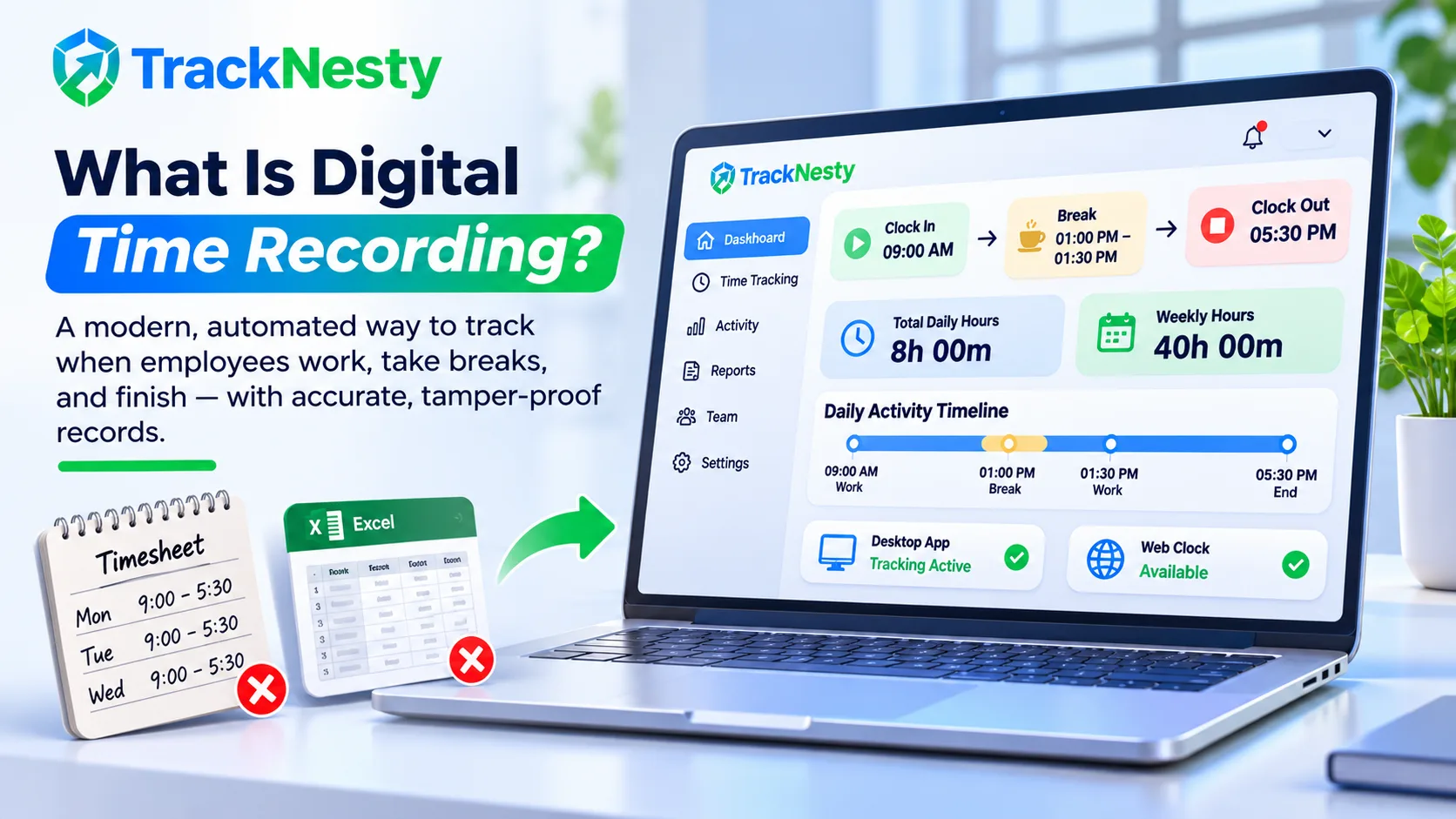
Digital time recording replaces paper and spreadsheets with an electronic record of when people start, stop and take breaks. In Europe, recording working time is already expected, and Germany is preparing to make electronic records the default. Even where it isn't required, it saves hours of admin and makes payroll far more accurate.
What Is Digital Time Recording?
Digital time recording is the electronic capture of working hours. Instead of writing times on a sheet or typing them into Excel at the end of the week, employees clock in and out through an app, a desktop agent, a web browser or a terminal. The system stores the start time, end time, breaks and total hours automatically.
You'll also see it called electronic time recording, working time recording or simply a time recording system. They all describe the same idea: a reliable, tamper-resistant record of who worked, when and for how long.
It overlaps with time tracking software, but the focus is slightly different. Time recording is about documenting working hours for compliance and payroll. Time tracking often goes further, into projects, clients and productivity.
Why Digital Time Recording Matters in 2027
Three trends are pushing employers away from paper and spreadsheets:
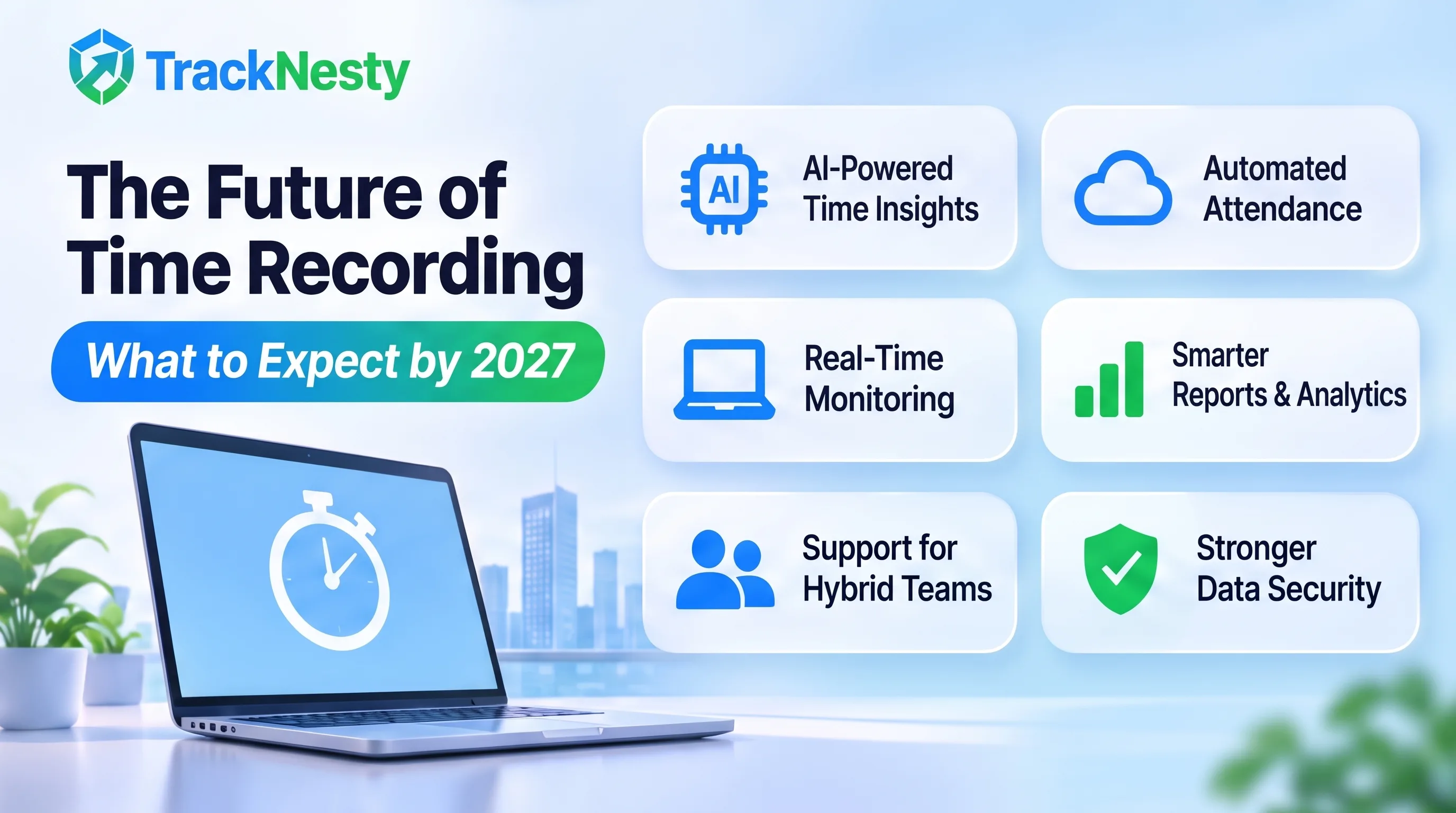
- Regulation. European rules expect employers to record working time objectively and reliably, and some countries are moving toward electronic records by default.
- Remote and hybrid work. When people work from home or across time zones, a signature on a paper sheet tells you very little.
- Payroll accuracy. Manual entries lead to rounding, forgotten breaks and overtime disputes. Digital records remove most of that guesswork.
Where the Law Stands (as of November 2026)
Note: this section is general information, not legal advice. Rules change and differ by country, so check the current requirements where you operate or speak to an employment lawyer.
The EU: recording working time is expected
In 2019, the Court of Justice of the European Union ruled that member states must require employers to set up an objective, reliable and accessible system for recording the time each worker works each day. The ruling didn't prescribe a specific format, but it made casual, unverifiable records hard to defend.
Germany: a draft law for electronic records
Germany is the country most people mean when they search for digital time recording. Since a Federal Labour Court ruling in September 2022, employers there have already been obliged to record their employees' working hours.
In June 2026, the Federal Ministry of Labour published a draft amendment to the Working Hours Act. Under that draft, employers would record the start, end and duration of daily working time, electronically as a general rule and on the same day the work is done. Very small employers would get exemptions, and trust-based working time would still be possible. As of November 2026, the draft had not yet been passed into law.
| Region | Status (Nov 2026) | What it means for employers |
|---|---|---|
| European Union | 2019 CJEU ruling in place | Have an objective, reliable and accessible system for daily working time |
| Germany | Recording required since 2022; electronic recording in draft (June 2026) | Record hours now, and prepare for electronic records becoming the default |
| Elsewhere | Varies by country | Overtime and wage rules usually still require accurate hour records |
Whatever the final law says, the direction is clear. Employers who already record time digitally won't need to scramble when new rules arrive.
What a Digital Time Recording System Should Capture
A good system records more than a single total per day. At a minimum, look for:
- Start and end times for each working day.
- Breaks, so paid and unpaid time are separated correctly.
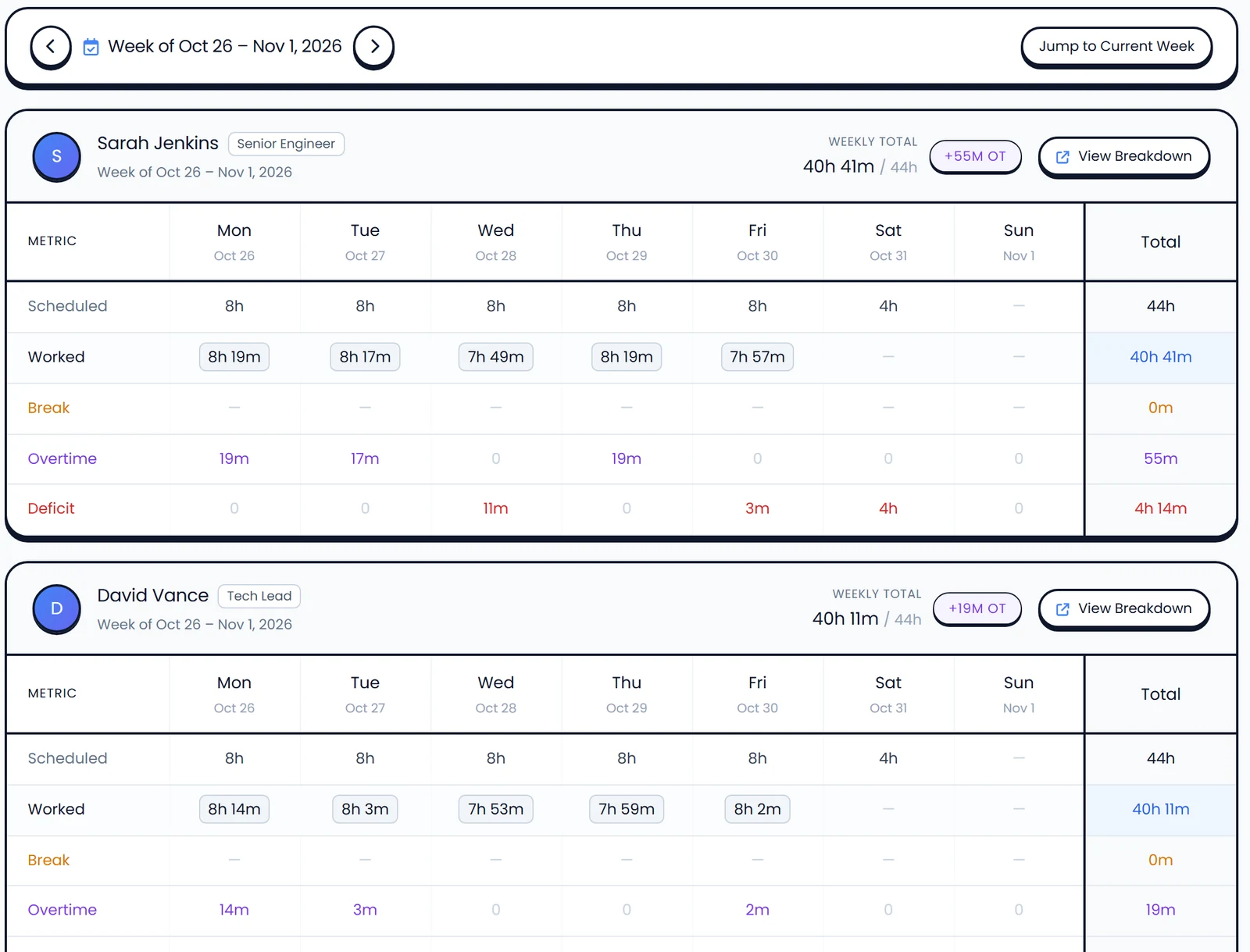
- Total daily and weekly hours, including overtime.
- Absences, such as leave, sick days and holidays.
- Corrections with an audit trail, so every edit shows who changed what and when.
Paper vs Spreadsheets vs Digital Time Recording
| Paper timesheets | Excel spreadsheets | Digital time recording | |
|---|---|---|---|
| Accuracy | Often filled in from memory | Manual entry, easy to get wrong | Recorded as work happens |
| Edits | Hard to verify | Can be changed silently | Corrections logged with an audit trail |
| Remote teams | Impractical | Files emailed back and forth | Works anywhere |
| Payroll | Re-typed by hand | Copied between sheets | Exported or calculated directly |
| Admin time | High | Medium | Low |
Spreadsheets still have their place for planning. If you're building a project plan, our project schedule template is a good starting point. For recording hours, though, a dedicated system is far easier to trust.
How to Switch to Digital Time Recording in 5 Steps
- Agree on the rules first. Decide how breaks, overtime and remote work are recorded before you choose a tool.
- Talk to your team. Explain what is recorded and why. People accept time recording much more readily when it's transparent.
- Set up schedules. Add each team's shifts with custom schedules, so late starts and overtime are measured against the right hours.
- Run a short pilot. Start with one team for two weeks, compare the results with your old records, and fix any gaps.
- Connect it to payroll. Once the data is reliable, use it to approve timesheets and run payroll.
How Tracknesty Handles Digital Time Recording
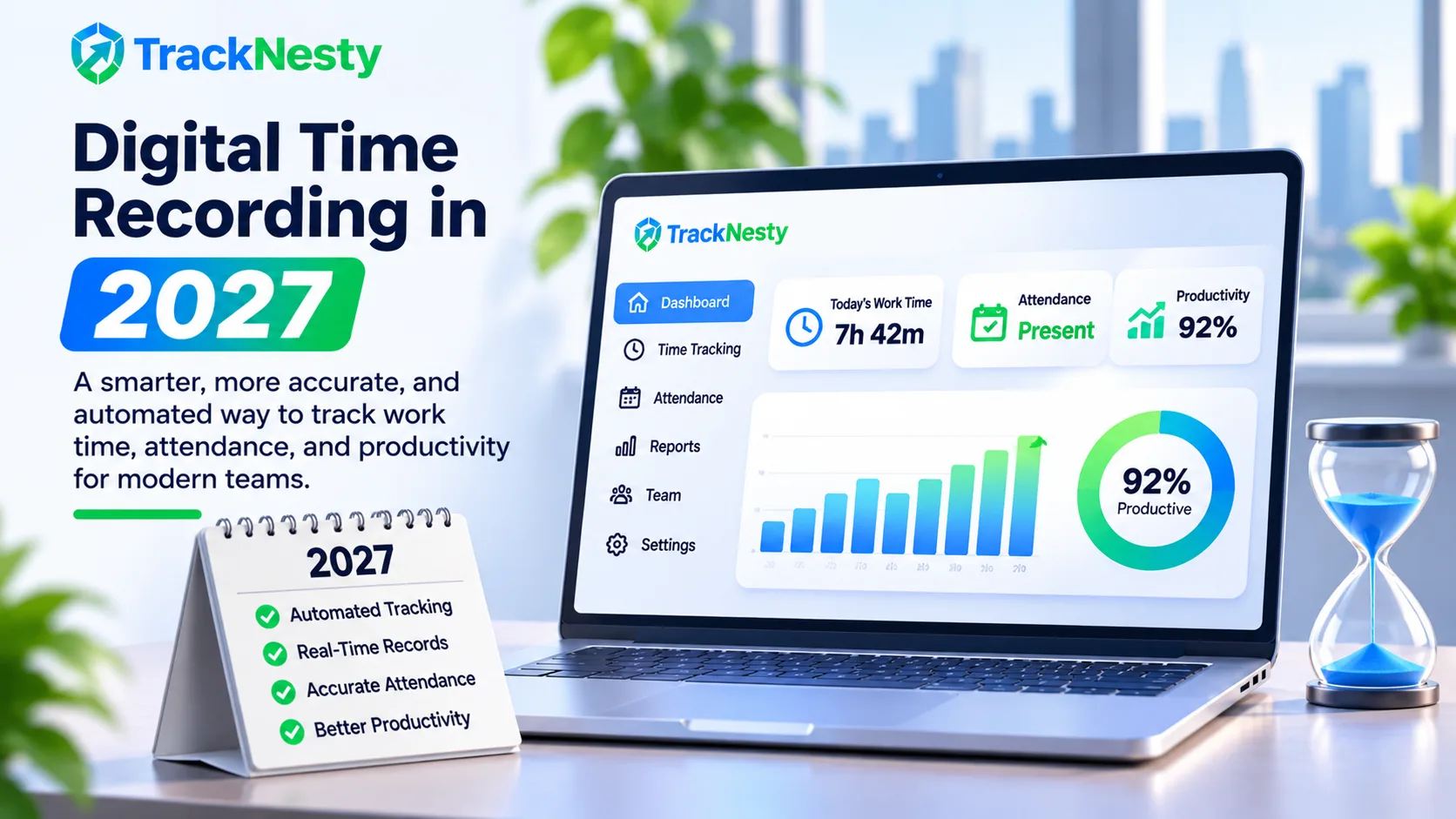
Tracknesty records working hours automatically from the desktop app, so employees don't have to remember to fill anything in:
- Automatic clock-in and clock-out when employees start and stop work, with employee attendance tracking against each shift.
- Breaks and idle time recorded separately, with idle time tracking flagging long inactive periods.
- Automatic timesheets built from recorded hours, ready for manager approval in our employee timesheet software.
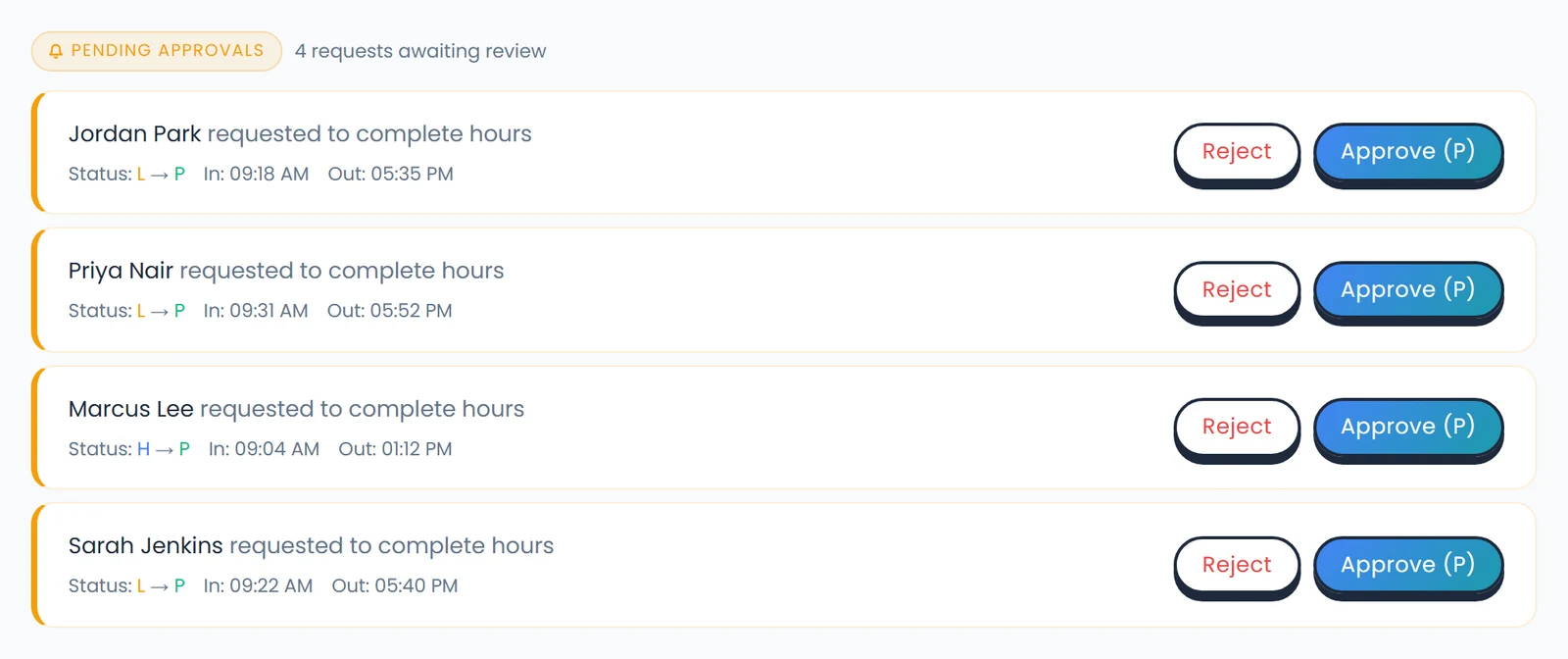
- Corrections with approvals, so missed punches are fixed through a request instead of silent edits.
- Leave and absences through leave management, kept in the same record.
- Payroll from approved hours with automated payroll, including overtime.
Want to see it in action first? Watch the automated attendance demo or the automated timesheets demo. Plans start at $3 per user per month. See the pricing page for details.
Move from paper and spreadsheets to reliable digital time recording before the rules make you.
Final Thoughts
Digital time recording is no longer just a convenience. In Europe it is becoming the expected way to document working hours, and in Germany the move to electronic records is well underway. Starting now gives you time to set fair rules, bring your team along and clean up your payroll process before anything becomes mandatory.
If you're new to the basics, our guide on what a timesheet is covers how recorded hours turn into payroll.
Frequently Asked Questions
What is digital time recording?
Digital time recording means capturing employees’ working hours electronically, with an app, desktop agent, web clock or terminal, instead of paper timesheets or manual spreadsheets. It records when work starts and ends, breaks, and total hours, and stores them as reliable records.
Is digital time recording mandatory in 2027?
It depends on the country. In the EU, a 2019 Court of Justice ruling requires employers to have an objective, reliable and accessible system for recording working time. In Germany, recording is already required by a 2022 Federal Labour Court ruling, and a June 2026 draft law would make electronic recording the general rule. As of November 2026, that draft had not yet been passed. Check the current rules for your country or ask an employment lawyer.
What working time data should employers record?
At a minimum, most rules expect the start time, end time and total duration of each working day. Recording breaks, overtime and absences as well makes the records far more useful for payroll and compliance.
Are Excel spreadsheets enough for time recording?
Spreadsheets can record hours, but they are easy to edit after the fact, hard to audit and depend on employees filling them in honestly and on time. Where rules call for reliable, objective records, a dedicated digital time recording system is the safer choice.
How much does digital time recording software cost?
Prices vary widely. Tracknesty starts at $3 per user per month and includes automatic attendance, timesheets and reports, with a 7-day free trial.
Legal information in this article reflects publicly available sources as of November 2026, including the 2019 CJEU ruling (case C-55/18), the German Federal Labour Court decision of 13 September 2022 (1 ABR 22/21), and the June 2026 draft amendment to the German Working Hours Act. It is not legal advice.